Hot Pavement Dog Paws: Summer Care and the 7-Second Test
As an Amazon Associate I earn from qualifying purchases. Affiliate disclosure
Hot pavement dog paws can burn in under a minute once the air passes the mid 80s, sources report. Sunlit asphalt runs far hotter than the air. Press the back of your hand on the ground for seven seconds. If you cannot hold it there, skip it. Walk early or late, use grass or shade, call your vet for blisters.
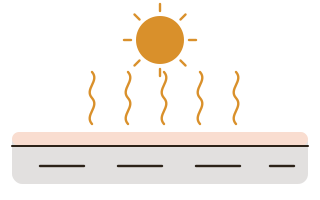
Hot pavement dog paws are the main summer hazard, and the air temperature on your phone understates it. Dark asphalt in full sun can run tens of degrees hotter than the air, and a dog's paw pads sit right against it. This guide gives you a pavement temperature chart with the source shown beside each figure, the hand test, a comparison of surfaces, the best times to walk, protection options, and what to do if a paw is burned. Updated October 13, 2026
Not veterinary advice. This page is general pet-care information from the sources linked below. For blisters, raw pads, limping or any sign of heat illness, contact your vet or an emergency clinic.
How hot is too hot? The short version
There is no one safe number, but the sources agree on the pattern. AKC chief veterinarian Dr. Jerry Klein says the ground may be too hot to walk a dog on when it is 85 degrees or over and the pavement has had no chance to cool. WebVet says burns can happen at air temperatures as low as 77°F. WSMV says paw pads can burn in less than a minute when asphalt is around 130°F, and WebVet puts the same under-a-minute figure at 143°F. Test the surface with your hand before every walk, and treat a warm evening sidewalk with suspicion, since pavement holds heat after the sun drops.
The hand test (the 7-second rule)
Press the back of your hand flat against the pavement and hold it there for seven seconds. If you have to pull away, it is too hot for your dog. Chewy and WebVet use seven seconds. AKC uses ten, and WebVet says some owners use five on humid or very sunny days. If you are unsure, go with the longer count.
- Use the back of the hand, not the fingertips or palm. Dr. Klein of AKC also says a bare foot works as a test.
- Test the spot where your dog will actually stand, such as the crosswalk, the curb cut or the driveway edge, not just the first patch of sidewalk.
- Chewy notes the test is a rough gauge. A quick touch cannot tell you the exact temperature.
- If it fails, move to grass or shade, or go home and walk later.
Pavement temperature chart for dogs: air vs asphalt
The table lists every air-to-asphalt pair we found, with the outlet that reported it. We could not trace the original measurements behind these pet-site charts. AKC credits one pair to the Journal of the American Medical Association without a citation we could open, and WebVet describes its figures as "typical estimates for dark asphalt in direct sun". Read the numbers as illustrations of how large the gap can be, not as lab results for your street.
| Air temperature | Asphalt (sunny day) | Reported by |
|---|---|---|
| 77°F (25°C) | 125°F (52°C) | Chewy, WebVet |
| 85°F | about 130°F | WSMV |
| 86°F (30°C) | 135°F (57°C) | AKC (citing JAMA), WebVet |
| 87°F (31°C) | 143°F (62°C) | Chewy, WebVet |
| 97°F (36°C) | 161°F (72°C) | Chewy |
The pairs do not line up perfectly: 86°F gives 135°F in one source and 87°F gives 143°F in another. That spread is expected. Chewy says sun exposure, cloud cover, surface color, wind and time of day all move the result, and that air temperature is measured several feet above the ground, not at paw level.
What a measured study found
One peer-reviewed study gives a more rigorous look at surfaces, though it was run for human burns, not dogs. Researchers at the University of Nevada, Las Vegas recorded six materials in sun and shade through spring and summer 2020, with thermocouples logging every three minutes (Journal of Burn Care & Research, 2023). Their sunlit peaks:
| Surface (full sun, Las Vegas) | Maximum recorded |
|---|---|
| Porous rock | 170°F |
| Asphalt | 166°F |
| Brick | 152°F |
| Concrete | 144°F |
| Galvanized metal | 144°F |
| Sand | 143°F |
Two findings matter for dog owners. Sunlit surfaces ran 36 to 56°F hotter than the same materials in shade, and the shaded samples peaked at 104 to 108°F, below the 110°F injury threshold the authors cite. Shade changes the answer more than almost anything else. This is a desert city, so peaks in milder climates will be lower, and the injury threshold the authors used applies to human skin.
Surfaces: asphalt vs concrete vs grass vs sand
Not every surface heats the same. WSMV reports that when the air reaches 85°F, grass may be around 88°F, concrete about 105°F and asphalt about 130°F. The Las Vegas measurements also put asphalt above concrete. Chewy gives these ranges, which it says draw on several studies, hottest first:
- Asphalt: 140 to 180°F.
- Artificial grass: 120 to 180°F. AKC and WebVet both list artificial turf as a surface that can get too hot.
- Wood and decking: 120 to 170°F.
- Metal: 140 to 160°F.
- Sand: 110 to 160°F.
- Concrete: 120 to 150°F. Chewy says it usually stays cooler than asphalt because its lighter color reflects more sunlight, but it can still burn in full sun.
- Dirt: 90 to 130°F.
- Natural grass: 80 to 100°F. The coolest option, and shaded grass is cooler still.
The practical takeaway: grass and shaded dirt trails beat any paved route in summer, and beach sand or a deck in midday sun is as risky as a road.
When to walk: time of day
Midday is the worst window. The sources give slightly different cut-offs. A vet quoted by Chewy says to walk before 8 a.m. or after 8 p.m. WebVet says before about 10 a.m. or after about 7 p.m. The Las Vegas study found peak surface temperatures mainly between 1 and 4 p.m. AKC advises avoiding the hottest part of the day and choosing grassy or shaded areas.
Because pavement keeps its heat into the evening, a 7 p.m. walk still needs the hand test. On very hot days, WebVet suggests exercising your dog indoors, and Chewy's vet source suggests puzzle toys. AKC adds that a dog's first long walk of the season can raise blisters, so build up gradually.
How to protect dog paws from hot pavement
Change the route first
Schedule is the cheapest protection: early or late walks, grass instead of sidewalk, shade instead of sun. Chewy's vet source also mentions a stroller for dogs that cannot avoid hot ground.
Dog booties for hot pavement
WebVet recommends well-fitted, breathable boots for ground you cannot avoid. AKC says to look for a snug but not tight fit, wrap-around closures and full-foot grips, and notes dogs need time to get used to them. A boot is also a layer on a surface that may exceed 140°F, so it narrows the risk rather than removing it. Our dog booties guide goes deeper.
Paw wax and balm
AKC mentions moisturizing products to prevent cracking, and says dry pads are more prone to burns. The caution is on the other side: Chewy's vet source says balms are best for mildly warm days and should not be relied on to prevent burns, and WebVet says wax helps with brief exposure but will not make dangerously hot pavement safe. Our paw wax page covers what wax can and cannot do. If your dog licks its feet, ask your vet whether a given product is fine to swallow.
After the walk
Rinse off dust and grit, and look the pads over. Our how to clean dog paws guide covers the steps. The cold-season mirror of this page is the winter paw care guide, which handles salt and ice melt.
Signs of burned paw pads
From Chewy and WebVet:
- During the walk: stopping suddenly, lifting or shaking a paw, hopping, walking gingerly, staying only on grass, whining or refusing to move.
- Mild, early signs: pads that look darker, feel rough or tender, or look slightly swollen, plus licking or chewing at the feet.
- Serious signs: redness, blisters, cracks, peeling or missing skin, bleeding, swelling, and pain when you touch the paws.
Pain can show up after you get home. If your dog walks normally outside and then limps in the house, check the pads.
Paw pad burn treatment: first aid and when to see the vet
The first aid steps below combine Chewy and WebVet. They are a bridge to a vet visit, not a replacement for it.
- Move the dog off the hot surface right away. Carry the dog if you can.
- Rinse the paws with cool, not cold, water for several minutes. WebVet suggests 10 to 15 minutes. Avoid ice and icy water.
- Pat dry, then cover the paw loosely with clean, non-stick gauze or a bandage. Not tight.
- Keep the dog calm and off its feet, and discourage licking.
- Do not pop blisters, and do not apply butter or human burn ointments unless your vet says so. Chewy notes many human burn products are toxic if licked.
When to see a vet
Call your vet promptly for blisters, raw or peeling pads, swelling, limping that lasts more than a day, or signs of infection such as pus, odor or fever. Chewy and WebVet say to go to an emergency clinic for large blisters, missing skin, bleeding, several burned paws, or a dog that cannot walk. Treatment can include pain relief, wound cleaning, antibiotics, bandage changes and, in severe cases, hospitalization or skin grafting (Chewy).
A note on heatstroke
Hot weather risks more than the paws. If your dog is panting heavily, drooling, weak or confused, treat it as an emergency. AKC lists the signs of heat stress and heatstroke; call your vet at once.
Frequently asked questions
What temperature is too hot for dogs to walk on pavement?
There is no single safe number, because sun, surface color and time of day matter as much as the air temperature. AKC chief veterinarian Dr. Jerry Klein says pavement may be too hot at 85 degrees or over without a chance for it to cool down (AKC). WebVet says burns are possible at air temperatures as low as 77°F (WebVet). Use the hand test every time.
Is there a pavement temperature chart for dogs?
Several sites publish one, and they differ a little. The table on this page shows each figure next to the source that reported it. Chewy calls its chart estimates and lists sunny-day asphalt at about 125°F when the air is 77°F (Chewy). A chart shows the risk is real; your hand tells you about the sidewalk in front of you.
How to protect dog paws from hot pavement?
Walk early or late, stay on grass or shaded dirt, and check the surface by hand first. AKC and WebVet also list well-fitted boots, and WebVet adds that paw wax helps only with brief exposure and will not make dangerously hot pavement safe (WebVet). See our notes on dog booties and paw wax.
Do dog booties for hot pavement work?
They can add a layer between the pad and the ground. WebVet recommends well-fitted, breathable boots for unavoidable hot ground, and AKC notes dogs need time to adjust to them (AKC). A boot still sits on a surface that may be over 140°F, so skipping the walk is safer on extreme days. More in our booties guide.
Does dog paw wax work for hot pavement?
Only to a limited degree. A vet quoted by Chewy says balms keep pads moisturized, suit mildly warm days, and should not be relied on to prevent burns (Chewy). See paw wax for what it can and cannot do.
What is the 7-second rule for dog paws?
Hold the back of your hand flat on the pavement for seven seconds. If it is too hot to keep it there comfortably, it is too hot for your dog's paws. Chewy and WebVet use seven seconds, and AKC says ten. Chewy calls it a rough gauge, not a measurement.
How do you know if a dog's paw pads are burned?
During the walk, a dog may stop suddenly, lift or shake a paw, hop, or refuse to move. Afterward, look for licking, darker or rough pads, redness, blisters, cracks, peeling or missing skin (Chewy; WebVet).
How do you treat a burned paw pad on a dog?
First aid only: get the dog off the hot surface, rinse the paws with cool, not cold, water, loosely cover them with clean gauze or a bandage, and call your vet. Do not use ice or human burn products unless your vet says to (Chewy). Blisters, raw skin and bleeding need a vet visit.